

Two forms of one craft through the lens of Czech producer Cousins Cider
Today, cider and wine have more in common than it might seem. They share production principles, work with specific varieties and terroir, and increasingly, their place on the gastronomic scene. In the hands of craft producers, what was once a simple drink is evolving into a sophisticated fermented beverage with a clear origin and the ambition to stand alongside wine. This is exactly the direction taken by the Czech project Cousins Cider from the Podkrkonoší region, which works with apple juice with the same precision that experienced winemakers apply to processing grapes.
Different foundations, shared principles
At first glance, cider and wine stand at opposite ends of the spectrum. The difference stems from the raw material, which determines the beverage’s basic parameters. Grapes have a higher sugar content, allowing for wines with alcohol levels typically between 12% and 15%. Apple juice contains less sugar; therefore, without added sweeteners, cider usually reaches 4.5% to 8% alcohol. The lower alcohol content of cider brings lightness and greater flexibility when pairing with food. Much like in wine, acidity plays a key role in cider, determining overall freshness. While wine relies on tartaric acid, cider is built on malic acid, which feels more direct and pronounced. In both cases, however, it is possible to soften the acidity through malolactic fermentation. The structure of the drink is also shaped by the content of phenolic compounds. In wine, tannins come from the skins and seeds of the grapes, while in cider, their value primarily depends on the chosen variety.
Terroir and varietal character as the essence of identity
Just like with wine, the origin of the raw material is essential for cider. The character of the drink is shaped not only by specific varieties but also by the conditions in which the apples grow. Traditional high-standard orchards with deep roots yield fruit with a higher concentration of aromatic substances and a structure that is key to the final expression. Combining individual types—from sweet to highly tannic—creates the final flavor structure, much like a wine cuvée.
Cider as a winemaking discipline
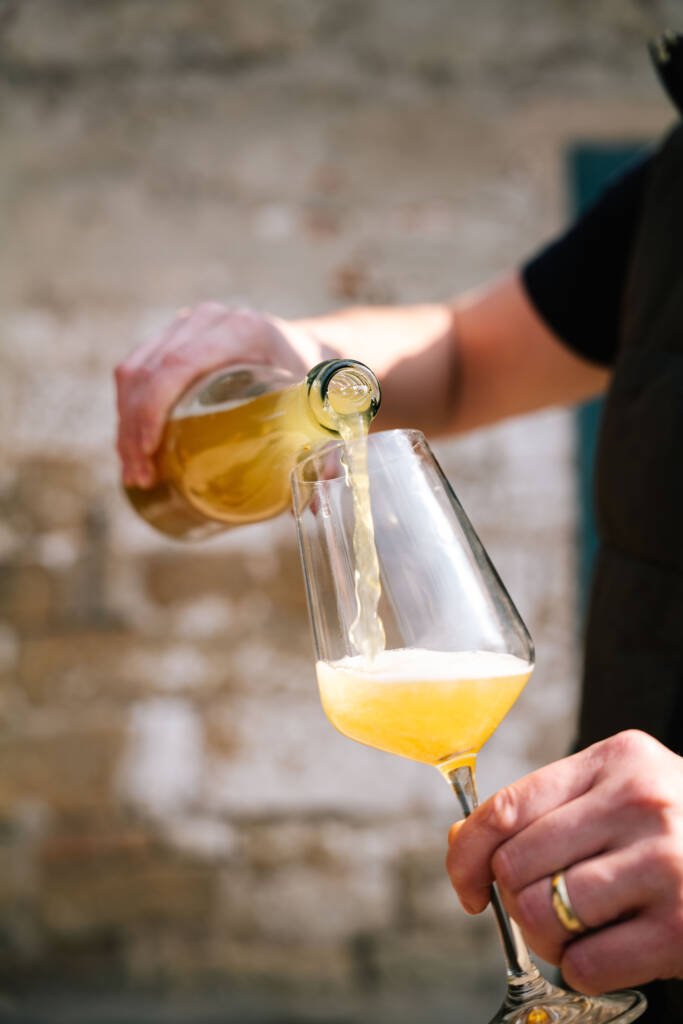
Working with varieties, fermentation types, and time shows how closely the two industries are related. Cousins Cider builds its production on principles common in established wineries. Individual apple varieties are often fermented separately to control their expression. The final character is created through subsequent blending or as single-varietal batches. In their approach, the emphasis on raw material quality is reflected not only in the decision not to use sulfur but also in the overall technological approach. The ciders are created without added colorants or aromas; they are unfiltered and, with the exception of the semi-dry variant, unpasteurized. This production method places high demands on precision and the fermentation process, while allowing the authentic character of the fruit and the vintage to be preserved. The ciders thus gain a clear signature from their creators—Kryštof Ryba, who is in charge of production, and Kristýna Rybová, a chemist by profession, who ensures analytical control and the stability of individual batches.
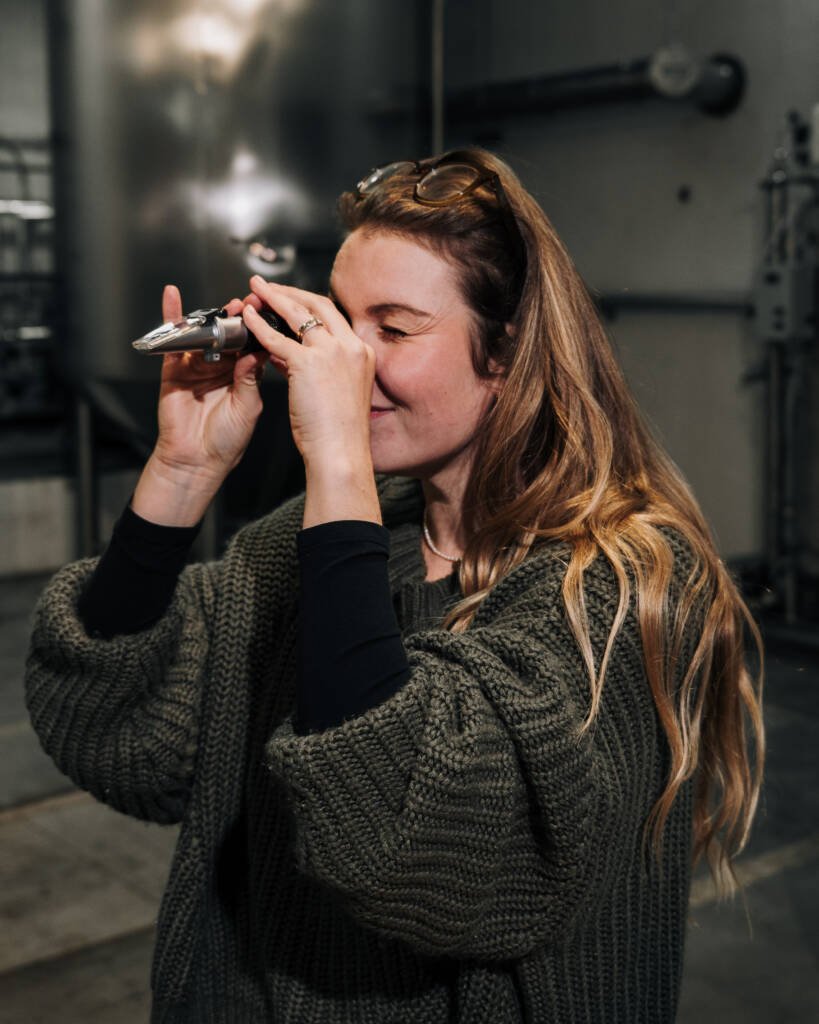
Kristýna Rybová, a trained chemist who oversees the demanding technological side of craft production.
Part of their work also involves choosing the type of aging. For selected batches, they choose barrique barrels, which give the cider structure and additional layers of flavor.
A textbook example of the connection between both worlds is the Apple & Grape cider, created by blending cider from old apple varieties from a Podkrkonoší orchard with still Müller Thurgau wine from the VINSELEKT MICHLOVSKÝ winery. Several months of spontaneous fermentation in a stainless steel tank resulted in a drink that naturally combines apple freshness with subtle wine notes, confirming how close these two worlds can be.
Cider in gastronomy: An indispensable ingredient
The ability of cider to stand its ground in gastronomy as a full-fledged ingredient is confirmed by its use in the kitchen itself. In his spring recipe, chef Martin Makovička works with green asparagus, hollandaise sauce with wild garlic, and a quail egg—a combination traditionally paired with white wine. In this case, however, the wine is replaced by Cousins Apple & Grape cider. Thanks to its subtle wine notes, it can enter directly into the preparation of the hollandaise sauce, where it performs the same function as white wine: it brings acidity, structure, and connects the individual components of the dish. From a pairing perspective, a similar principle applies. The cider’s acidity lightens the richness of the sauce, the lower alcohol does not disrupt the delicacy of the asparagus, and the fruit profile complements the vegetable notes of the dish. In practice, cider confirms its ability to enter the same gastronomic discipline that wine has long represented.
Contemporary craft cider production shows that they are no longer just an alternative, but are becoming a full-fledged part of modern gastronomy and everyday enjoyment. Cousins Cider is one example that convincingly confirms this shift in the Czech environment.